
Nithin Kamath. Aman Gupta. Ghazal Alagh. Namita Thapar. Deepinder Goyal. Falguni Nayar. Vineeta Singh.
You didn’t just read a list of founders. You instantly connected these names with Zerodha, boAt, Mamaearth, Emcure, Zomato, Nykaa and SUGAR Cosmetics.
The reason is simple.
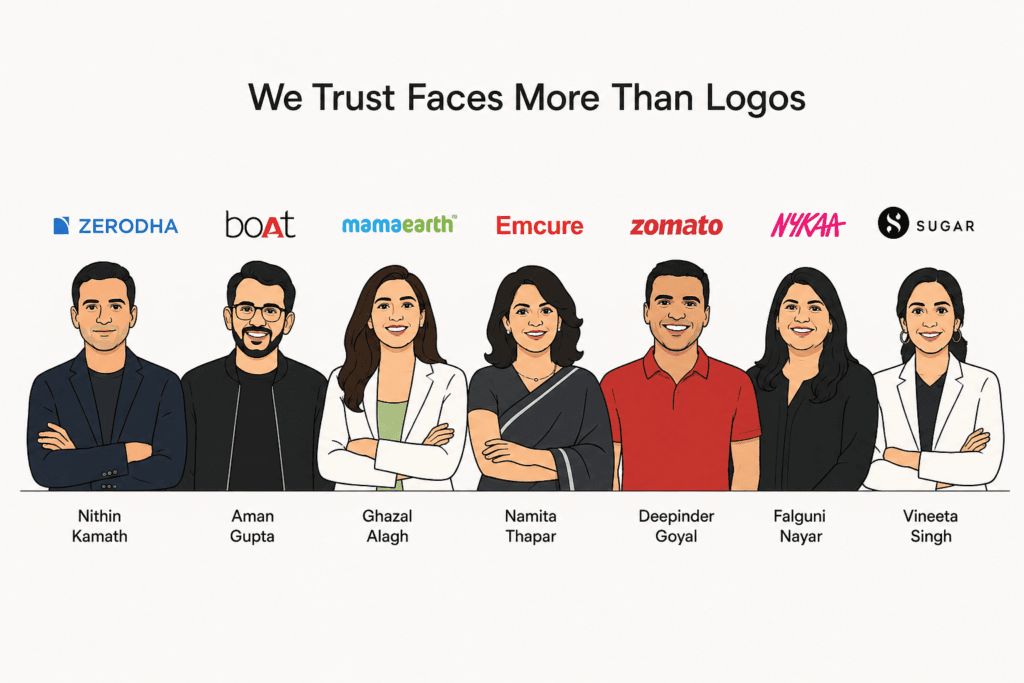
Our brains are naturally wired in a funny way. When we see a corporate logo, we process it just like an object—a rock, a chair or a brick wall. We naturally look at it with a bit of doubt. But the moment we see a human face, something changes. We instinctively start looking for trust, intent and connection.
For decades, India admired business icons like Ratan Tata, Anand Mahindra and Mukesh Ambani. But they always felt distant, seen only in formal news photos, television interviews or annual meetings.
Today’s founders don’t seem far from us. They live inside our phones. They are arguing on X, writing raw advice on LinkedIn and delivering orders on their own bikes on YouTube. They have turned themselves into one of their company’s biggest competitive advantages.
This isn’t social media posting anymore.This is modern brand building based on how humans trust, buy, and connect in 2026.
What is Founder Branding?
Jeff Bezos once said, “Your brand is what people say about you when you’re not in the room.” Founder branding works the same way. It’s what people think of when they hear a founder’s name—their expertise, values and credibility. Over time, that perception influences how they see the company itself.
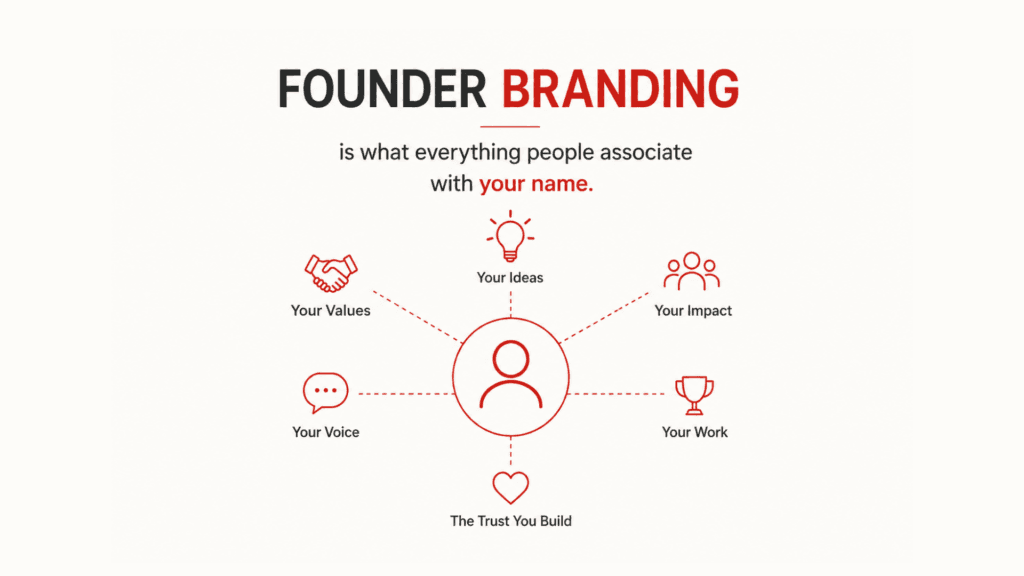
According to the 2025 Edelman Trust Barometer, trust in company leadership plays a significant role in how people perceive and engage with businesses. Similarly, LinkedIn’s B2B Thought Leadership Impact Report found that executive thought leadership can influence purchasing decisions, making business leaders far more than just decision-makers—they become trust builders for the brand.
That’s why founder branding isn’t about becoming famous or collecting followers. It’s about building credibility that compounds over time.
How Founder Branding Creates Business Value
It reduces marketing costs
Building trust through advertising is expensive. Founder branding helps businesses earn attention instead of buying it.
Zerodha is perhaps India’s strongest example. Nithin Kamath has consistently shared his views on investing, health and entrepreneurship, turning himself into one of the company’s biggest distribution channels. In 2025, he revealed that Zerodha had crossed 1.6 crore customers without ever advertising, with nearly 30% of new customers coming through referrals.
It attracts the right talent
People don’t just apply to companies. They apply to cultures.
When Aman Gupta publicly defended Gen Z while much of corporate India criticised them, he wasn’t trying to go viral. He argued that Gen Z’s habit of asking “Why?” instead of blindly saying “Yes” makes teams more creative, and said he enjoys working with them. That single post signalled what boAt values as an employer—curiosity over hierarchy. For many young professionals, that’s more compelling than any careers page.
It builds trust before the first purchase
People often trust the founder before they trust the product.
Long before PhysicsWallah became one of India’s biggest edtech companies, Alakh Pandey spent years teaching for free on YouTube with nothing more than a whiteboard and a marker. Millions of students experienced his teaching before they ever paid for a course. When PhysicsWallah launched paid offerings, students weren’t buying from an unfamiliar edtech company—they were choosing a teacher they already trusted. That trust became the foundation of the business.
It strengthens the brand
A founder’s story often becomes the brand’s story.
Ghazal Alagh repeatedly spoke about why Mamaearth existed—her struggle to find safe, toxin-free products for her newborn son. Instead of advertising features, she kept reinforcing the brand’s purpose. That consistency helped customers associate Mamaearth with trust and transparency, contributing to Honasa Consumer becoming India’s first unicorn of 2022 before its successful public listing.
How to build a strong founder brand?
A founder brand isn’t built by posting every day. It’s built by becoming known for something. The strongest founder brands aren’t famous because they create content—they’re remembered because they consistently share a point of view.
Find your expertise
Don’t try to speak about everything. Nithin Kamath is known for investing and entrepreneurship. Aman Gupta talks about branding, consumer behaviour and workplace culture. Alakh Pandey built his reputation around teaching. The more focused your expertise, the stronger your recall.
Share your thinking, not your marketing
People don’t follow founders to watch product advertisements. They follow them to understand how they think. Talk about decisions, failures, lessons, hiring, industry trends and the challenges of building a business. Let your products appear naturally within those conversations.
Show the journey, not just the wins
Founder branding isn’t about looking successful. It’s about being relatable. The late-night problem, the difficult decision, the lesson from a failed campaign or a customer complaint often creates more trust than announcing another milestone.
Stay visible
Trust compounds through repetition. One viral post won’t build a founder brand, but showing up consistently over months and years will. Whether it’s LinkedIn, podcasts, interviews or public speaking, every appearance should reinforce the same values and perspective.
Above all, remember this: people don’t follow founders because they’re CEOs. They follow founders because they have something worth saying. The company may introduce the founder, but it’s the founder’s ideas that keep people coming back.
The Founder-Led Decade
The last decade built brands through logos, campaigns and advertising. The next will build brands through founders.
Not because logos have become less important, but because attention has become more human. In a world overflowing with products, advertisements and AI-generated content, people are increasingly choosing businesses through the people behind them.
The founders who stay invisible won’t disappear. They’ll simply be outshined by founders who are willing to share their thinking, their journey and their vision. The opportunity has never been bigger.
At Spartan Media, we’ve seen founder-led content consistently outperform traditional brand-first communication because audiences connect with people before companies.
Start building your company. But don’t forget to build your personal brand.
FAQs
What is founder branding?
Founder branding is the process of building a founder’s reputation, credibility and public identity. A strong founder brand helps businesses earn trust, attract talent and influence buying decisions.
Why is founder branding important?
Founder branding humanizes a business. People often trust and connect with founders before they trust a company, making it a powerful long-term marketing asset.
What’s the difference between founder branding and personal branding?
Personal branding is for any individual, while founder branding focuses specifically on entrepreneurs and business leaders. Its purpose is to strengthen both the founder’s reputation and the company’s brand.
Which platform is best for founder branding?
LinkedIn is often the most effective platform for B2B founders, while X, YouTube and podcasts also help build credibility depending on the audience.
How long does it take to build a founder brand?
Founder branding is a long-term strategy. Consistently sharing valuable insights and experiences over several months helps build trust and recognition.
Can small business owners benefit from founder branding?
Yes. Founder branding isn’t limited to startup founders or CEOs. Local business owners, consultants and entrepreneurs can also build trust and attract customers by sharing their expertise and journey.